Author: Róbert Pollák
The city of Košice is developing a new housing strategy. The model that drove its development in recent decades has reached its limits. Housing has become unaffordable for middle-income households, young talent is leaving the city, and the transition to a diversified economy requires a different approach. Relying exclusively on commercial construction financed primarily through mortgages cannot ensure the volume and affordability of housing that the city needs.
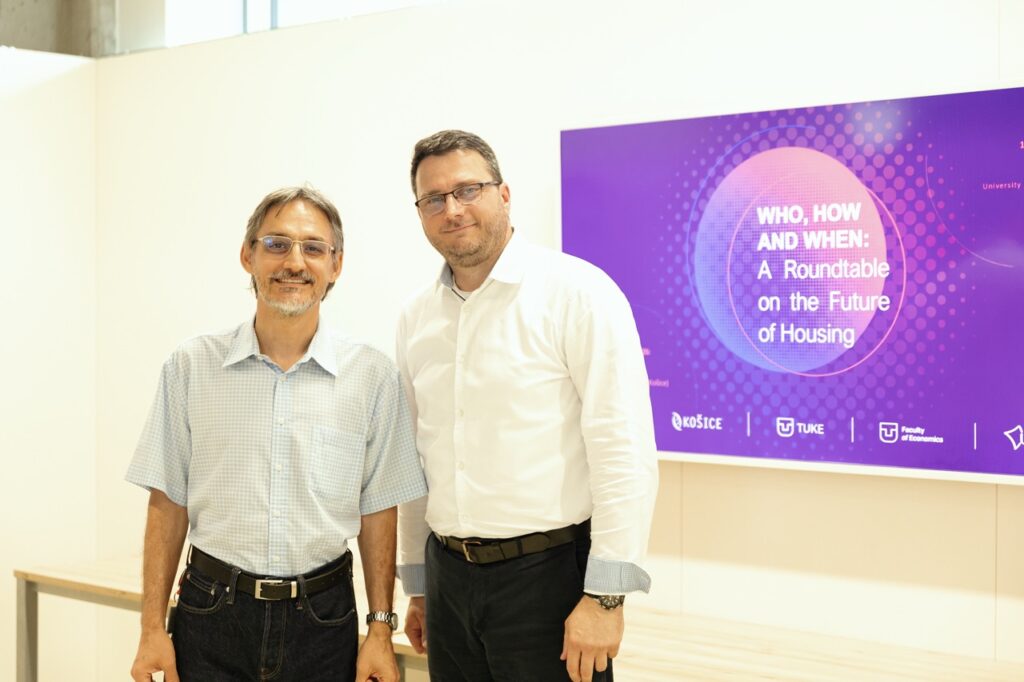
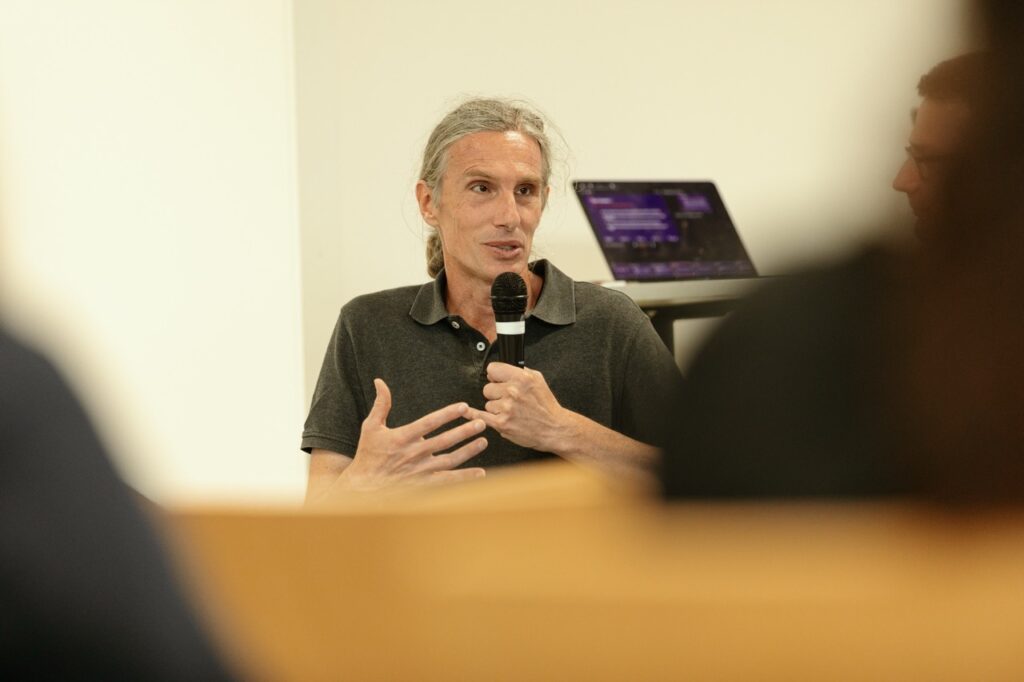
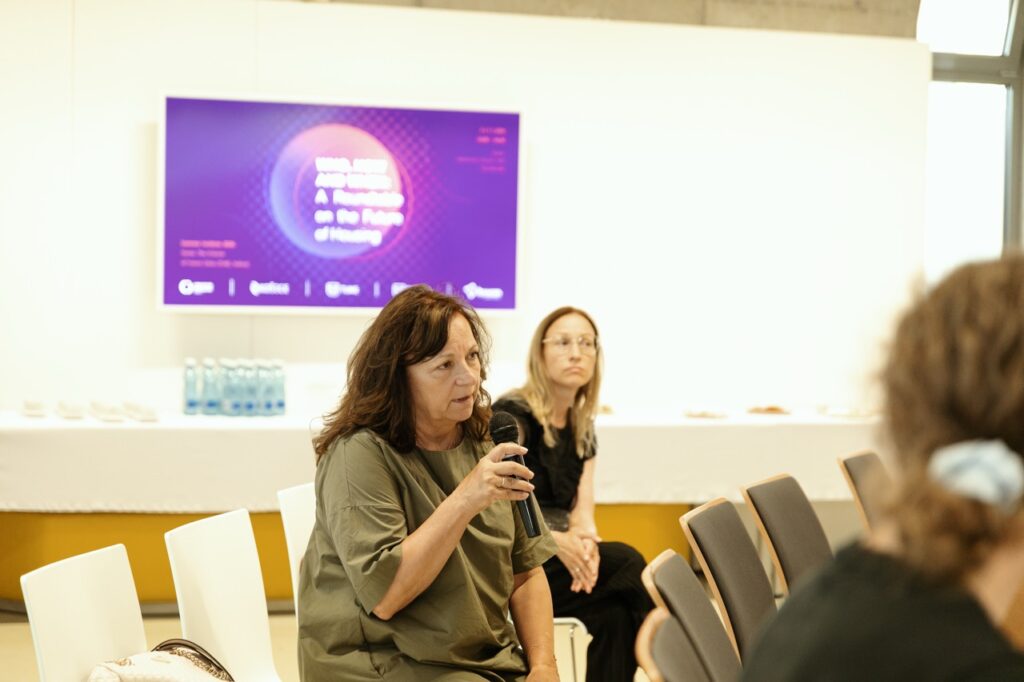
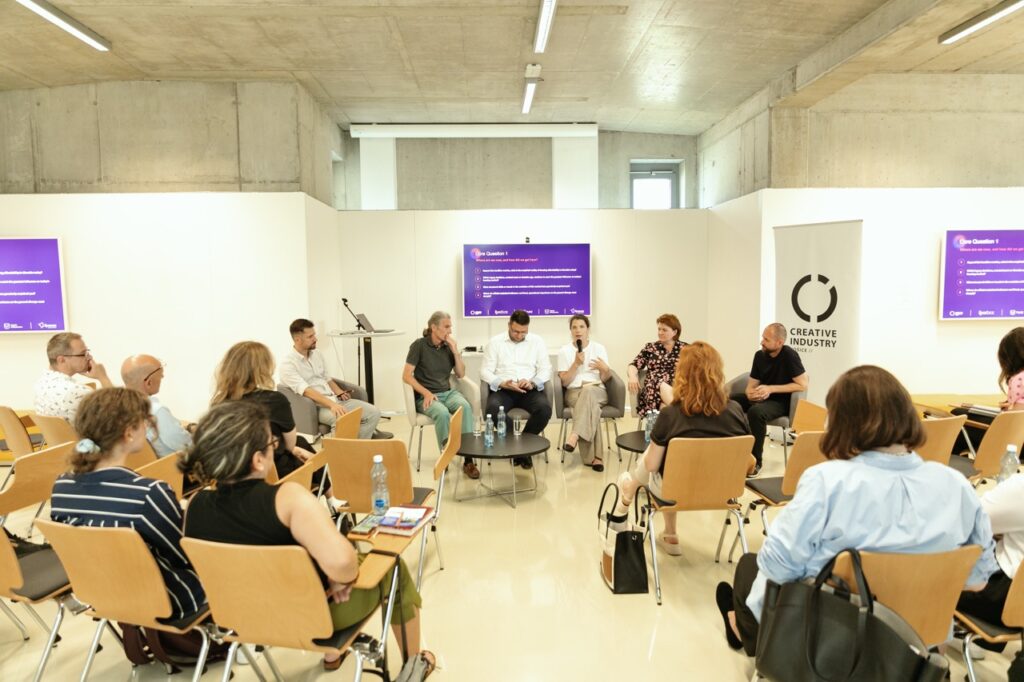
These topics were addressed at the roundtable discussion “Who, How, and When: The Future of Housing,” which took place on July 2, 2026, at the University Science Park TECHNICOM in Košice. The event was part of the Summer Institute 2026: Home – The X-factor of Future Cities, organized by Creative Industry Košice, the City of Košice, TUKE, the Faculty of Economics at TUKE, and Ulysseus.
From the number of apartments to the key players
The discussion shifted the focus from the question of how many apartments the city needs to the question of who invests in the housing system, who bears the risk, and who manages it—and what role the city itself should play in this structure. The program covered the entire spectrum of housing models: from social and affordable rental housing through cooperative and community-based concepts to the role of private developers and institutional investors.
The event also launched a year-long analytical project aimed at developing a functional housing strategy for Košice.
Program
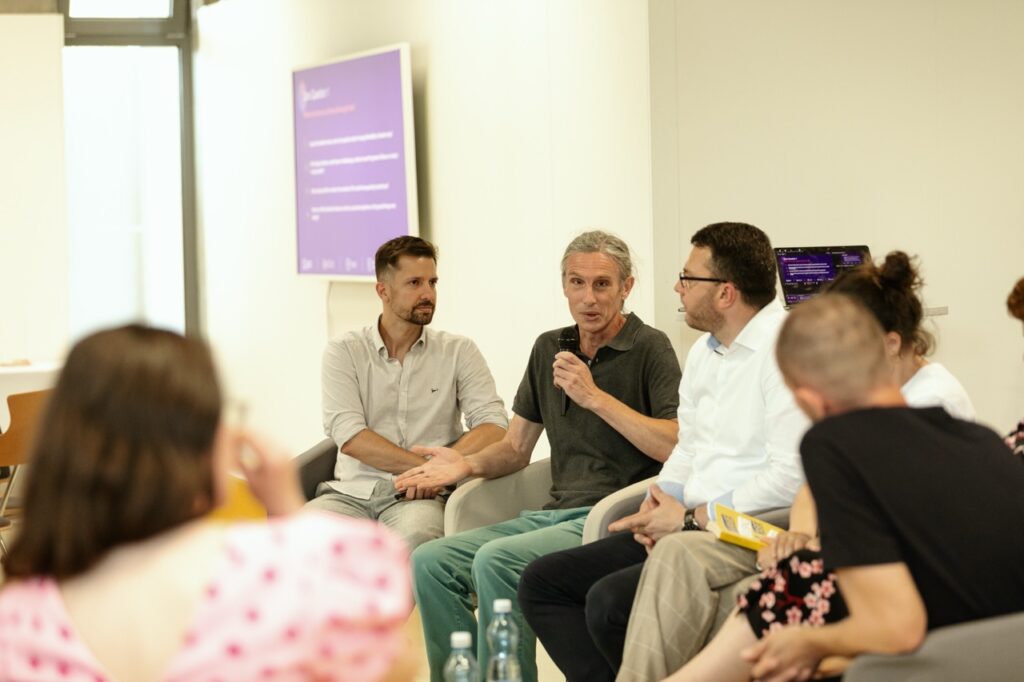
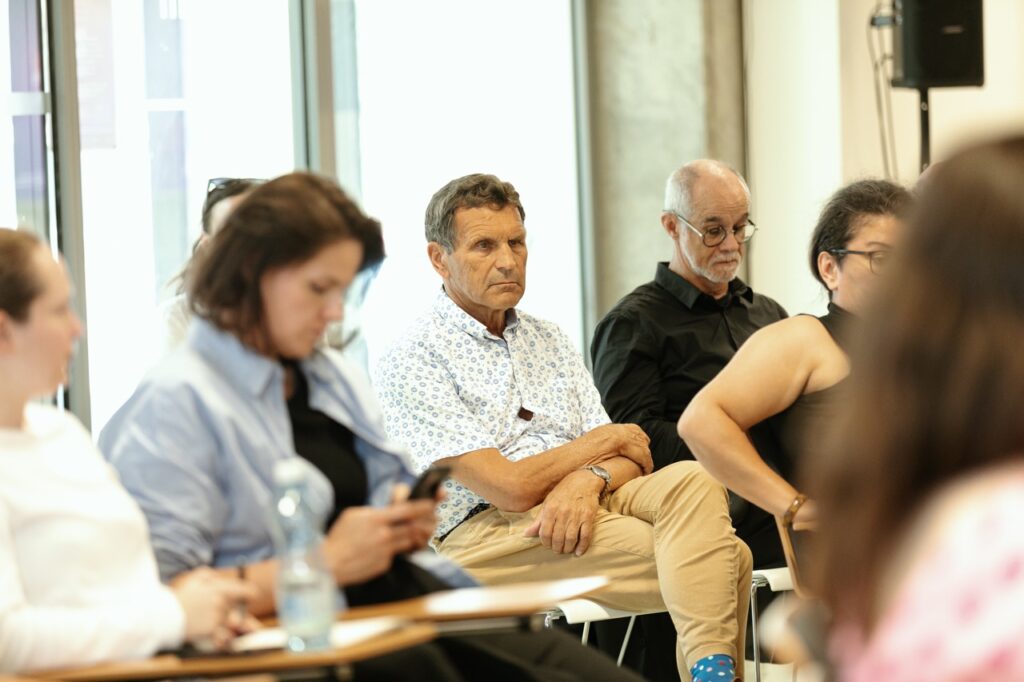
The afternoon began with a presentation of the new housing strategy for the city of Košice (City of Košice + CIKE), followed by the main panel discussion featuring experts from local government, the private sector, the nonprofit sector, and academia. The second half of the program consisted of a moderated discussion in which panelists and the audience exchanged views—the event was designed as a working session, not a formal conference.
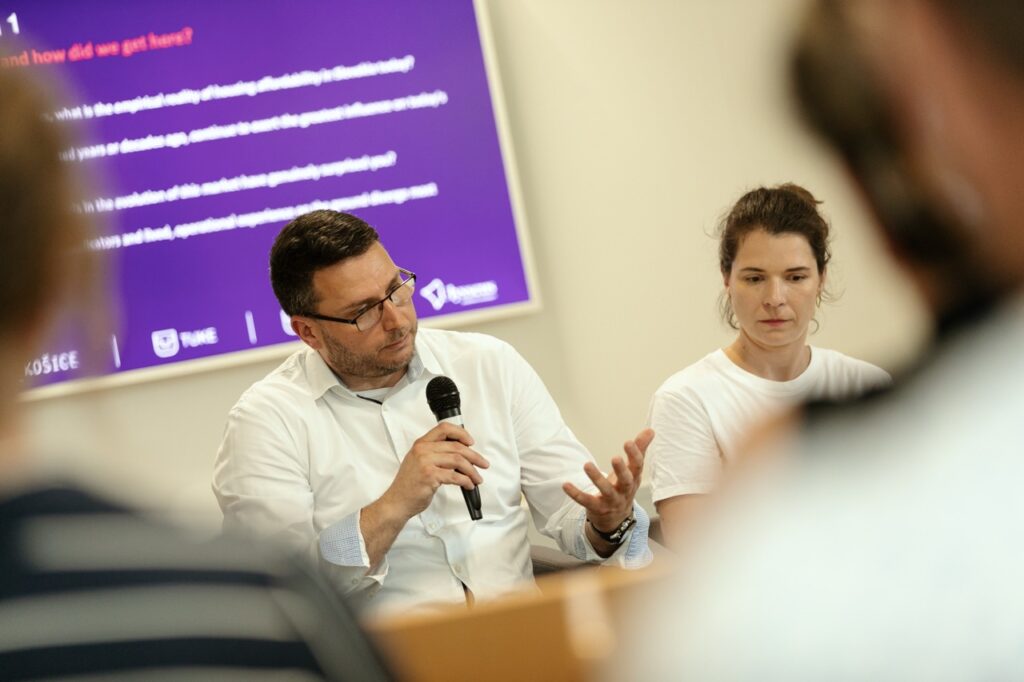
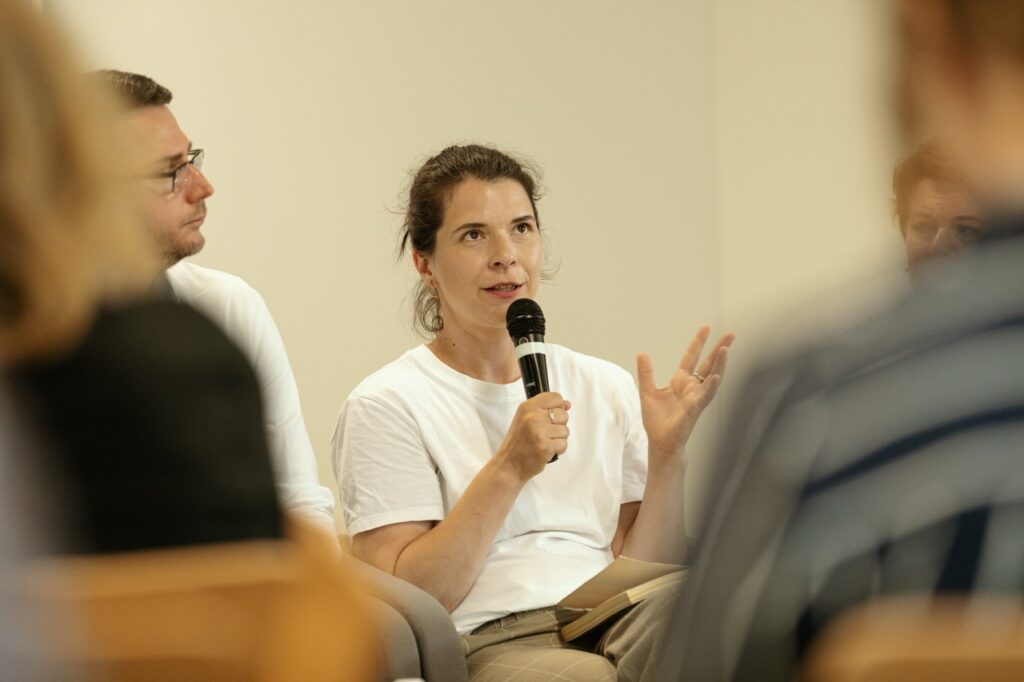
Panel discussion
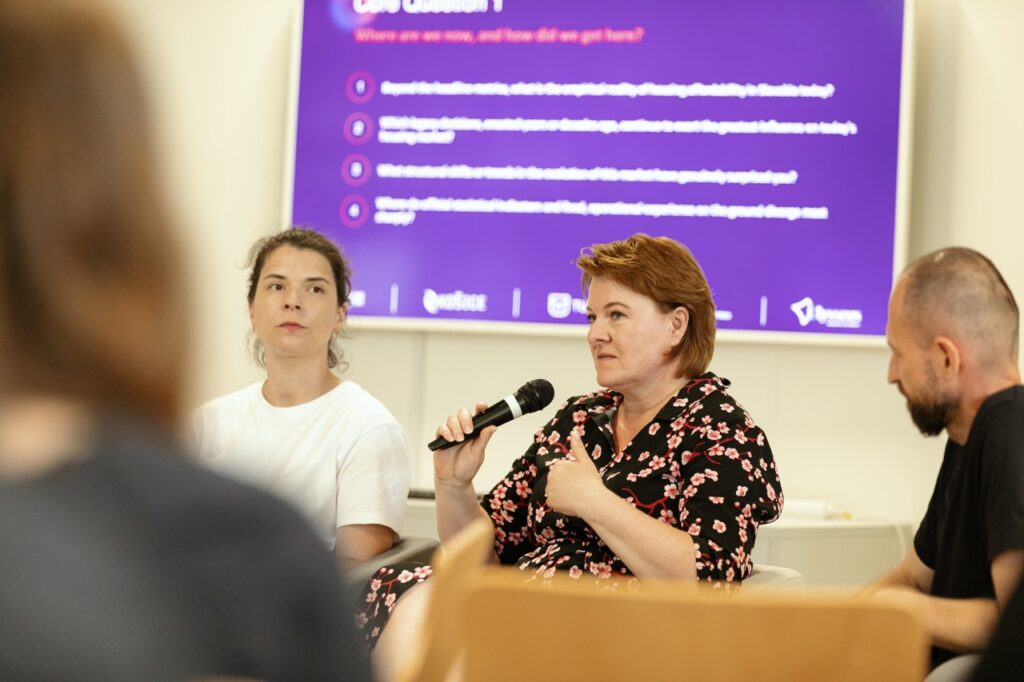
The panel presented four key perspectives on the housing issue:
Jana Frenová (Project Implementation Officer, City of Košice) provided the local government’s perspective.
Cyril Chovan (Head of Regional Branch Office, CRESCO REAL ESTATE a.s.) represented the private sector, developers, and financing issues.
Zuzana Réveszová (Researcher, Spolka o.z.) spoke on behalf of the nonprofit sector and community- and cooperative-based housing models.
Mark Tirpak (Adjunct/Affiliated Faculty Member, Virginia Tech’s School of Public and International Affairs) represented the academic community, emphasizing research and the international context.
Why This Is Important?
For developers, investors, and financing institutions, this was an opportunity to become directly involved in the city’s housing agenda even before the political frameworks and investment priorities are firmly established. For researchers and practitioners, it was a chance to anchor their expertise in a specific urban context, and for the local government, the event provided a structured dialogue with stakeholders whose decisions will shape the city’s future development.
What the discussion brought?
The opening of the discussion revealed that individual participants approached housing policy from different perspectives. Local government, developers, the academic community, and the nonprofit sector naturally emphasized topics based on their own experiences and areas of expertise. However, as the discussion progressed, these differing perspectives began to converge, and the focus shifted to identifying common problems that will need to be addressed when developing a new housing strategy.
Several themes recurred throughout the discussion. Participants agreed that a high-quality housing policy cannot be based on estimates but must be grounded in data. One of the priorities will therefore be a detailed mapping of the housing stock, ownership structure, vacant units, and the functioning of the local market, so that future decisions are based on verified information.
Another key theme was the need for greater cooperation between the city, the private sector, nonprofit organizations, and academia. Housing development does not occur in isolation—it requires coordination of land-use planning, infrastructure, permitting processes, and communication with the public. The discussion showed that a partnership between the public and private sectors need not be a conflict of interest, but rather a prerequisite for high-quality urban development.
A significant portion of the debate also focused on the existing housing stock. Instead of focusing exclusively on new construction, proposals were made on how to better utilize existing housing through incentives for owners, the development of social rental agencies, and the creation of conditions that reduce the risks associated with renting.
Participants also pointed out that a housing strategy cannot focus solely on the construction of new housing. Housing was repeatedly identified as a fundamental prerequisite for successfully addressing broader social issues—ranging from labor force participation to health outcomes to the social integration of vulnerable groups.
This is precisely why the need was emphasized to consider housing holistically and to link investments in the housing stock with social work, employment, education, and other public policies.
What’s Next?
The roundtable also launched the analytical phase of preparing a housing strategy for the city of Košice. In the coming months, the team will focus on collecting and consolidating data on the housing stock, ownership structures, and the functioning of the local market, which will form the basis for further decision-making.
Concurrently, expert desk research will be conducted, focusing on proven foreign and domestic housing policy models and their applicability to the conditions in Košice. Continuing the expert dialogue will also remain an important part of the process—over the next year, further thematic discussions and working meetings will be held with representatives of local government, the private sector, the academic community, nonprofit organizations, and other stakeholders.
The goal is not to develop a strategy behind closed doors, but to create a document based on data, professional expertise, and broad collaboration. The discussion at the Summer Institute 2026 thus did not mark the end of the conversation about housing in Košice, but rather its beginning.